Choosing a school away from home raises many questions for parents. They want to know whether the education is strong, whether the hostel is comfortable, whether their child will be safe and whether teachers will give enough support. They also want their child to grow as a person, not just collect marks. Keeping that in mind, this guide is meant for families looking for the best residential school in Cuttack or anywhere in Odisha.
Quick Answer: The best residential school in Odisha is one that balances academic standards, hostel facilities, safety measures, extracurricular activities, healthcare and student support. Parents should check each of these facilities in person during a campus visit and compare schools side by side before making a final choice.
What Should Parents Check Before Choosing a Residential School?
A residential school becomes your child's second home so the decision deserves a careful look. These are the main areas to review before you shortlist.
• Curriculum and affiliation
Confirm that the school is affiliated to a recognised board such as CBSE and ask how the syllabus is taught across the classes.
• Teaching and learning support
Find out how well teachers know each child and whether extra help is available for students who are struggling.
• Hostel and supervision
See the rooms in person and ask who looks after the children at night.
• Safety and healthcare
Look for trained security staff, CCTV and a medical facility on campus.
• Sports and activities
Check whether the school gives children regular time for games, art, music and clubs.
• Food and well-being
Ask about the menu, who plans it and how the school keeps track of each child's health and mood.
If your child is still getting used to the idea, our post on whether your child is ready for boarding school can help.
What Makes a Boarding School in Odisha a Good Choice for Students?
A boarding school in Odisha gives children a steady daily routine with fixed times for classes, meals, study, games and rest. This structure takes much of the guesswork out of a child's day and teachers are close by when academic help is needed.
Living away from home also builds independence. Children learn to look after their belongings, follow a schedule and meet deadlines without constant reminders. Over time, this develops discipline and better time management.
Shared living adds further benefits. Students live and study with classmates from different backgrounds so they learn to cooperate, settle disagreements and take responsibility in a group. Many also get chances to lead. Sports, music, art and clubs help children discover strengths that marks alone do not show. Our post on the benefits of boarding schools covers this in more detail.
What Hostel Facilities Should Parents Look for in a Residential School?
Hostel life shapes a large part of a child's day so the facilities need a close look. Parents can use this list during a visit.
• Clean, comfortable rooms
Check the ventilation, bedding, bathrooms and cleaning routine.
• Trained residential staff
Ask who supervises children in the evening and at night and how many students each warden looks after.
• Healthy meals
The dining hall should be clean and the menu should be planned with children's nutrition in mind.
• Medical care
A doctor or nurse should be easy to reach with a clear plan for emergencies.
• Safe study and play areas
Children need quiet spaces to study and safe places to relax.
• Contact with home
Ask how often children can speak to their parents and how families receive updates.
A school that answers these questions clearly and lets you see the answers for yourself usually runs its hostel with care. If any school replies vaguely then that’s a warning sign.
Why Should Parents Consider SAI International Residential School?
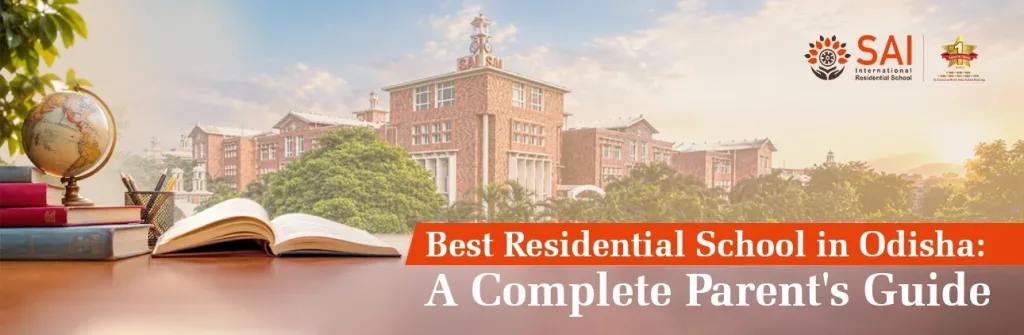
SAI International Residential School is a CBSE school with full residential education for Classes IV to XII. Our Cuttack campus keeps classrooms, hostels, sports areas and dining on one site so students are looked after throughout the day. The CBSE curriculum is closely linked to NCERT books which also helps students who plan to take JEE and NEET later.
Our classrooms are equipped with touch-screen smart boards and there are separate labs for physics, chemistry and biology. Every student is paired with a mentor who follows their studies and well-being. Boys and girls stay in separate hostels run by House Masters and House Wardens with CCTV, round-the-clock guards and wardens and an infirmary with doctors and trained nurses. Meals are prepared under a nutritionist's supervision.
Outside class, students can use the swimming pool, tennis court and playground, learn music, dance and art and join clubs. They are also given responsibilities and encouraged to make their own decisions which builds leadership and independence. Admissions are open for 2027-28. You can send an admission enquiry online or write to admissions@sirs.edu.in to arrange a campus visit.
Conclusion
Choosing a residential school means looking beyond results. The right school balances academic learning, student safety, comfortable hostels and personal development.
At SAI International Residential School, we aim to offer all four on one campus in Cuttack. To learn more, read the admission details on our website and arrange a campus visit by writing to admissions@sirs.edu.in.
FAQs
1. What is the right age for admission to a residential school?
Residential schools usually admit students from the upper primary classes onwards. At SAI International Residential School, admission begins at Class IV, for children who have completed Class III or an equivalent grade.
2. What facilities should parents expect from a residential school?
Parents should expect clean hostels, nutritious meals, trained supervision, medical care, quiet study areas, sports grounds, laboratories and a library, along with regular communication between the school and home.
3. Is CBSE a good curriculum choice for residential school students?
Yes. The CBSE syllabus is closely linked to NCERT books which also form the base for entrance exams such as JEE and NEET and the board is recognised across India.
4. How can parents stay connected with children living in hostels?
Parents can stay connected through scheduled phone calls, updates from mentors and teachers, parent-teacher meetings and campus visits.
5. What documents are required for residential school admission?
Most schools ask for a birth certificate, photographs, the last report card, a transfer certificate and an ID proof. Requirements vary so confirm with the school; our admission guide explains the process.
6. How can parents compare residential schools before admission?
Make a shortlist, visit each campus and score every school on the same checklist covering academics, hostel, safety, healthcare and activities.