“Independence is not about being away from home; it is about learning to stand confidently on one’s own.”- Anonymous
One of the most common concerns parents have about residential education is whether their child is ready to live away from home. The concern is understandable because independence involves much more than being physically separated from parents. It requires children to develop confidence, responsibility, decision-making ability, adaptability and the willingness to seek help when necessary.
Independence, however, does not need to begin when a child reaches adulthood. It can be developed gradually through everyday experiences in an environment that provides appropriate freedom alongside guidance and support. This is one of the significant ways in which residential education can contribute to a child's development.
Independence Through Residential Life
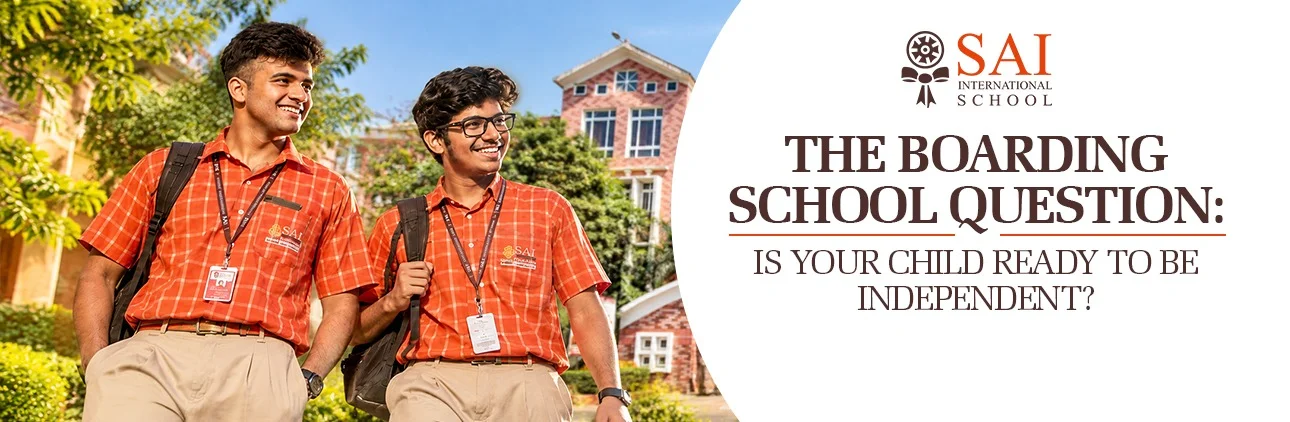
At SAI International Residential School, residential education is viewed as a process of transformation rather than accommodation. Students learn through community living and everyday responsibilities, developing qualities such as independence, responsibility, leadership, respect for diversity, collaboration, emotional intelligence, adaptability, time management and conflict resolution.
Living on campus gives students opportunities to manage their own schedules, take responsibility for decisions, solve everyday problems and learn from both success and setbacks. These experiences allow students to develop self-reliance within a structured educational environment rather than being expected to become independent without guidance.
The Mentor–Mentee Programme
The development of independence at SIRS is supported by a strong culture of personalised handholding. Every student is paired with a dedicated mentor who acts as a trusted guide throughout the student's learning journey. Mentors regularly engage with students to understand their academic progress, aspirations, emotional well-being, personal growth and overall development.
The Mentor–Mentee Programme supports academic planning, goal setting, leadership development, emotional well-being, time management, confidence-building, decision-making and career and university aspirations. This ensures that independence is developed alongside reflection and guidance.
The wider residential ecosystem further strengthens this support. House Parents, teachers, counsellors, sports coaches and residential staff contribute to creating a safe, nurturing and encouraging environment for students.
Parents as Partners
Residential education does not diminish the role of parents. At SIRS, parents remain active partners in their child's development, with regular communication between parents, mentors and teachers supporting a collaborative approach.
This balance between independence and support is central to meaningful residential education. Students are given opportunities to make decisions, manage responsibilities and solve problems while knowing that there is a strong support system around them.
The objective is not to make students independent of their families. It is to help them become sufficiently confident and capable to manage the responsibilities that come with university, professional life and adulthood while remaining connected to the people and values that have shaped them.