Ask most parents what they want from a school and they’ll say good marks. Ask them what they remember from their own school days and it’s usually the playground, a match they lost or a coach who wouldn’t let them quit. That says something. Sports aren’t a break from learning. They’re a big part of it.
Sports and fitness keep students healthy, sharpen focus in class and teach teamwork and discipline. Regular physical education also lowers stress and improves sleep. Schools that treat fitness as part of everyday learning, not an extra period, tend to raise more confident, balanced children.
How Does Physical Activity Help a Child’s Body and Brain?
Children who move more usually feel better and it shows up in the classroom. The World Health Organization recommends that children and teenagers aged 5 to 17 get at least 60 minutes of moderate to vigorous activity every day. A lot of students fall short of that, especially when homework, tuition and screens fill the evening.
The benefits of physical activities go beyond strong muscles. Active kids tend to sleep better and a child who has slept well finds it easier to concentrate. Exercise also helps with stress. A tough maths test feels a little less heavy after forty minutes on the field.
Then there’s a social side too. Playing together is one of the easiest ways for shy children to make friends because the game gives everyone something to talk about. This is the quiet case for fitness in education: it supports the exact things teachers are trying to build, like attention, energy and a positive mood.
What Is the Importance of Physical Education in a School Day?
Many people still think of PE as a free period where kids run around. A good PE class does more than that. It teaches coordination, balance, basic rules of different games and how to warm up and cool down without getting hurt. Those are skills a child can use for life.
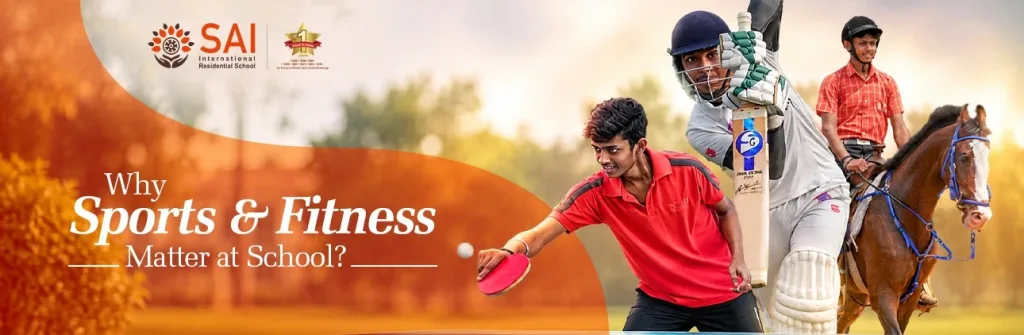
The importance of physical education also lies in habits. A child who enjoys movement at ten is far more likely to stay active at thirty. And when PE is planned properly with a gentle start for beginners and a challenge for stronger players, every child gets something out of it. Not everyone will be a cricketer or a swimmer and that’s fine. The aim is for each student to find at least one activity they like enough to keep doing.
How Do School Sports Programs Shape Character?
Marks tell you how a child did on one paper. School sports programs tell you how a child handles things when they don’t go well. That’s a hard lesson to teach from a textbook.
On a team, a student learns to lose a match and show up for practice the next day. They learn to pass the ball even when they’d love to score. The quieter ones sometimes end up as captains and that one role can change how they see themselves.
Competition against other schools adds to this. When students from different campuses play together, they learn to respect an opponent and still want to win. Events like that show how a simple game can turn strangers into friends within a few hours.
Why Do Sports Facilities in a School Matter?
There is no doubt that children need the right space to play and grow. Good sports facilities in school make regular practice possible and they make it safer too. When you visit a campus, a few things are worth checking:
-
Open grounds big enough for several groups to play at once
-
Courts or a stadium for more than one sport so children can try different things
-
Trained coaches who work with students rather than just supervise them
-
Indoor options for rainy days and hot afternoons
-
A first-aid setup or infirmary close to the playing areas
Variety matters most. A child who is bored of one game should have another to try. A school that offers swimming, tennis, indoor games, athletics and team games gives students room to find out what suits them.
How Can Schools Balance Fitness and Academics?
The common worry is that more sports means less study time. In practice, it often works the other way around. A short period of activity before or after lessons helps students stay alert so the study hours they do have are used better.
The trick is routine. Fixed hours for games, a proper PE schedule and an activity like yoga help children manage their energy through the day. Residential schools have an advantage here because the daily timetable can include sports at the same time every day.
Conclusion
Sports and fitness do far more than burn energy. They keep children healthy, help them focus, teach them to work in a team and show them how to get back up after a loss. Good physical education builds habits that last well past school and a strong sports programme gives every child a place to shine, even those who aren’t top of the class. None of this works without proper space, trained guidance and a daily routine that makes room for it.
At SAI International Residential School, this is how we try to run things. Our sports facilities support swimming, basketball, cricket, tennis and track events so students can try different sports and make a name for themselves in the ones they love. Our coaches work with students on skills and fitness throughout the week. Because our students live on campus, sport is part of the daily timetable instead of something squeezed in after school.
If you’d like to see our grounds and talk about how we support students in the classroom and on the field, you’re welcome to get in touch with our admissions team.