“A child’s character is shaped not by one influence, but by the environment in which they learn, live and grow.”- Anonymous
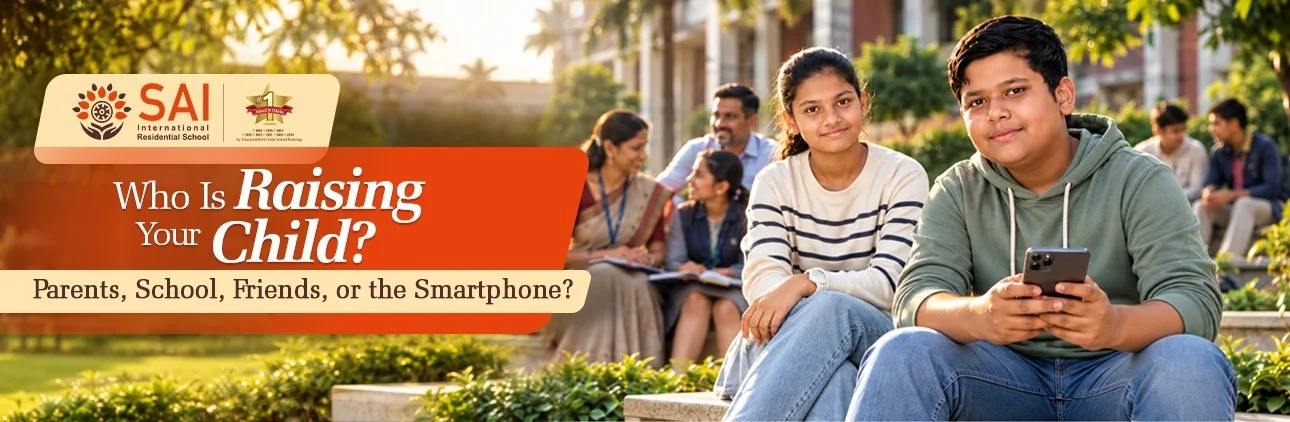
The environment in which children grow up has a profound influence on their habits, relationships, attention and understanding of the world. Today, alongside parents, teachers and peers, digital technology has become another significant influence in a child's everyday life. Smartphones, social media, gaming, online entertainment and constant connectivity offer valuable opportunities for learning and communication, but they can also compete with the time children need for physical activity, reading, face-to-face interaction, reflection and rest.
For parents, the important question is therefore not whether technology should be removed from a child's life, but whether children are being guided to use it with purpose. In an increasingly digital world, education must help young people understand the difference between using technology as a tool and allowing technology to become a source of constant distraction.
Technology With Purpose
SAI International Residential School approaches technology through the principle of intentional use. The objective is not to disconnect students from the digital world, but to help them develop the discipline and judgement required to use technology responsibly. While smartphone use in residential life is intentionally limited, technology remains an integral part of academic learning. Students have access to a comprehensive Digital Library, online journals and academic resources, research platforms, digital learning tools and technology-enabled classrooms. These resources support research, exploration, collaboration, creation and meaningful learning rather than passive consumption.
SIRS also follows a thoughtful communication approach for residential students. Instead of unrestricted smartphone access, students remain connected with their families through scheduled communication using QWERTY keypad phones. This enables regular family contact while reducing the distractions commonly associated with smartphones and social media. The underlying objective is to develop focus, self-discipline, healthy digital habits and meaningful human connections.
Creating a Balanced Residential Environment
A residential school provides an opportunity to create a structured environment in which children's time is not defined by academics or digital engagement alone. At SIRS, students experience a learning community where they study, live, participate in sports, engage in activities, build friendships and take responsibility for their shared environment. The campus functions as an integrated learning ecosystem, with learning taking place in classrooms, residences, sports arenas, dining spaces and through everyday community experiences.
The emphasis on face-to-face conversations, meaningful friendships, outdoor activities, reading, sports, reflection and community living provides students with experiences that are essential to personal development. This is particularly significant at a time when digital stimulation can easily occupy the spaces that would otherwise be used for physical activity, social interaction and quiet reflection.
Education Beyond the Screen
The SIRS approach recognises that technology has an important place in contemporary education, but it should complement rather than replace human interaction and real-world experiences. Sports, yoga, performing arts, clubs and societies, innovation, community living and skill development form an important part of the residential experience.
The purpose of residential education, therefore, is not to create a technology-free childhood. It is to create an environment in which technology remains one component of a much broader educational experience. By combining purposeful digital learning with structured routines, physical activity, community living and personal development, SIRS seeks to help students become capable of navigating the digital world without allowing it to dominate their lives.